
Prolongance: Changing the Contract

This is the first essay in a series unpacking Prolongance. It begins inside the family frame, at a time when photography felt less like a record and more like a form of control.
Prolongance: Changing the Contract
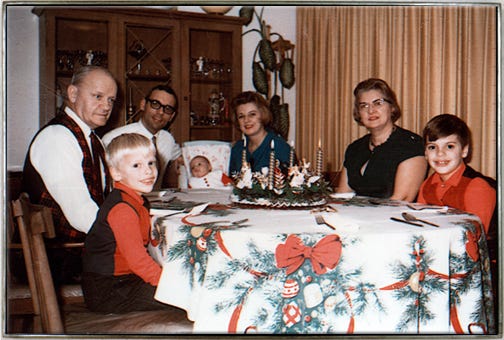
I grew up under the zealous snap of my mother’s shutter and blitz of her flash. Every occasion came with orders: hold still, look here, stop making faces, smile. The camera promised preservation and optimism, even as it insidiously seized control of the moment. Conversation froze, bodies tensed, feelings curdled. Life bent to the logic of framing and to her relentless direction. I loved what her photographs held, yet resented what they cost. I felt the control, the way process and image could dominate experience. The very attempt to save the moment kept us from fully being in it. I struggled to accept that tradeoff.
That tension stayed with me, and I carry it into every picture. It pushes me to ask what a photograph does to time, presence, agency, and trust, and how I might use a camera without freezing the room. I want to engage the medium without ambivalence or repeating that same unsettling posture of command and control.
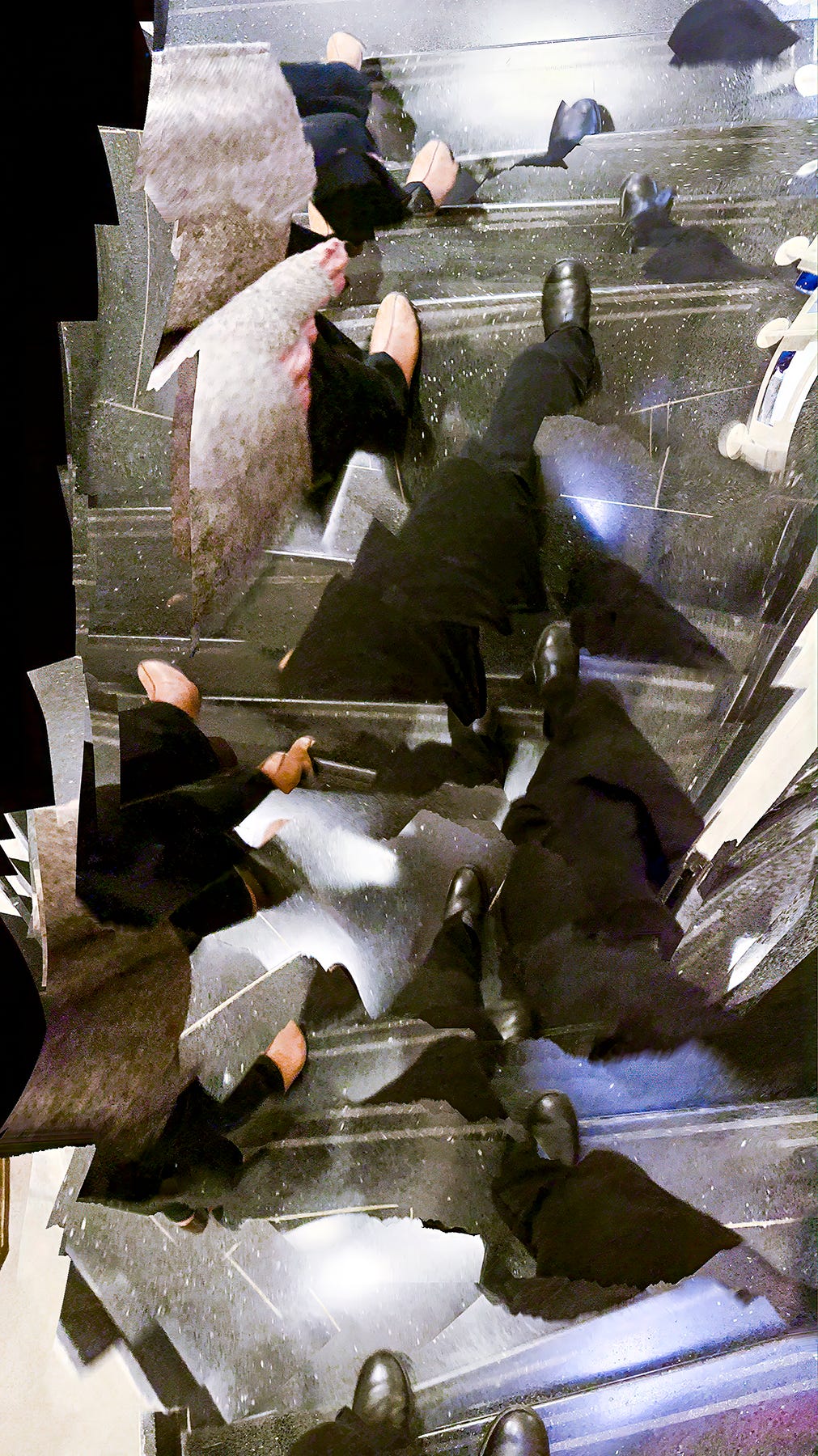
I kept the camera but changed the contract. I now move. I move with the world, and sometimes against it, but I stay in motion. Prolongance is my way of refusing the fixed, obedient pose. I walk, pivot, and lean with the shutter open, letting each moment accumulate as I negotiate gait, balance, and direction, responding to an environment in flux and cues from technology. Each image emerges as a durational event rather than a single, decisive moment. I accept distortions, voids, and glitches instead of correcting them.
In a culture where the AI-driven camera phone has become the default instrument of self-presentation and expression, I am a beneficiary of its immediacy and frictionless access, yet I see how that same convenience can erode presence and turn attention toward performance. I use that same infrastructure to keep imperfection and instability visible. Prolongance tests whether the photographic process can return some of the presence it so often trades away in the name of immediacy.
I cannot claim to repair what the camera fractures. I can only practice accountability and presence, moving as I record, keeping the frame open, resisting the urge to perfect or control every detail, asking for reciprocity. What remains is a negotiated trace, where my body, the world, and the device meet without fully mastering one another.
Prolongance does not free me from photography’s economy of capture, it changes how I participate in it while acknowledging the friction and uncertainty that define my images.
Broader Cultural Critique: Loss of Control and the Ethics of Chance
There is a persistent question in my work regarding control: how to loosen it without abandoning responsibility. Most photographic workflows are based on the idea that the photographer gains more control as the image progresses from capture to its final form. The camera gathers raw material, then software and careful selection refine and correct it. Cropping, masking, and retouching tighten that control, steering a messy slice of the world toward a particular intention.
Prolongance pulls in a different direction. I am still making choices, but I build a significant amount of chance into the process. When I move through space in panorama mode, I am not aiming for a perfect, seamless view that I will later polish. I walk, descend, pivot, hesitate, reverse direction. I cross thresholds and stairwells, drift through crowds, follow and abandon glances. I know the device will misread much of this, that it will bend, double, or erase parts of what I pass. Instead of treating those outcomes as errors to be fixed, I accept them as part of the work.
This acceptance is neither a lapse in craft nor a surrender of responsibility. It is an ethical decision in a culture that prizes control, curation, and correction. The contemporary camera phone is exceptional at correcting imperfections. It is engineered to recognize faces, smooth skin, brighten eyes and skies, reshape bodies, sanitize scenes, and optimize surfaces before I even see the file. There are picture modes that sculpt depth and blur backgrounds, beauty filters that polish away texture, and computational routines that stitch together multiple exposures, so that every scene looks balanced and clean. With a few taps or commands, I can straighten horizons, remove blemishes, and filter surfaces until they conform to a familiar, optimized look. I have worked for decades in such a control posture, but to work inside the same device coveted by millions for these very attributes, and refuse that arsenal, letting the algorithm’s glitches and blind spots remain visible, is a way of acknowledging that my view of the world is partial and unstable.
Letting go of control happens on two fronts. On one, I give more agency to the world. People walk through, hesitate, turn away. Cars pass. Architecture folds and unfolds as I move. I do not wait for an empty street, so that the scan will be clean. I step into traffic, into the fray, and let what follows define the image. On the other front, I give more agency to the device itself, allowing the panorama engine to make its own decisions about what fits and what fails. I do little to correct those decisions later. The black fields, the fractures, the ghosted limbs, and kinked lines are a joint production of my movement, the environment, and the phone’s internal logic.
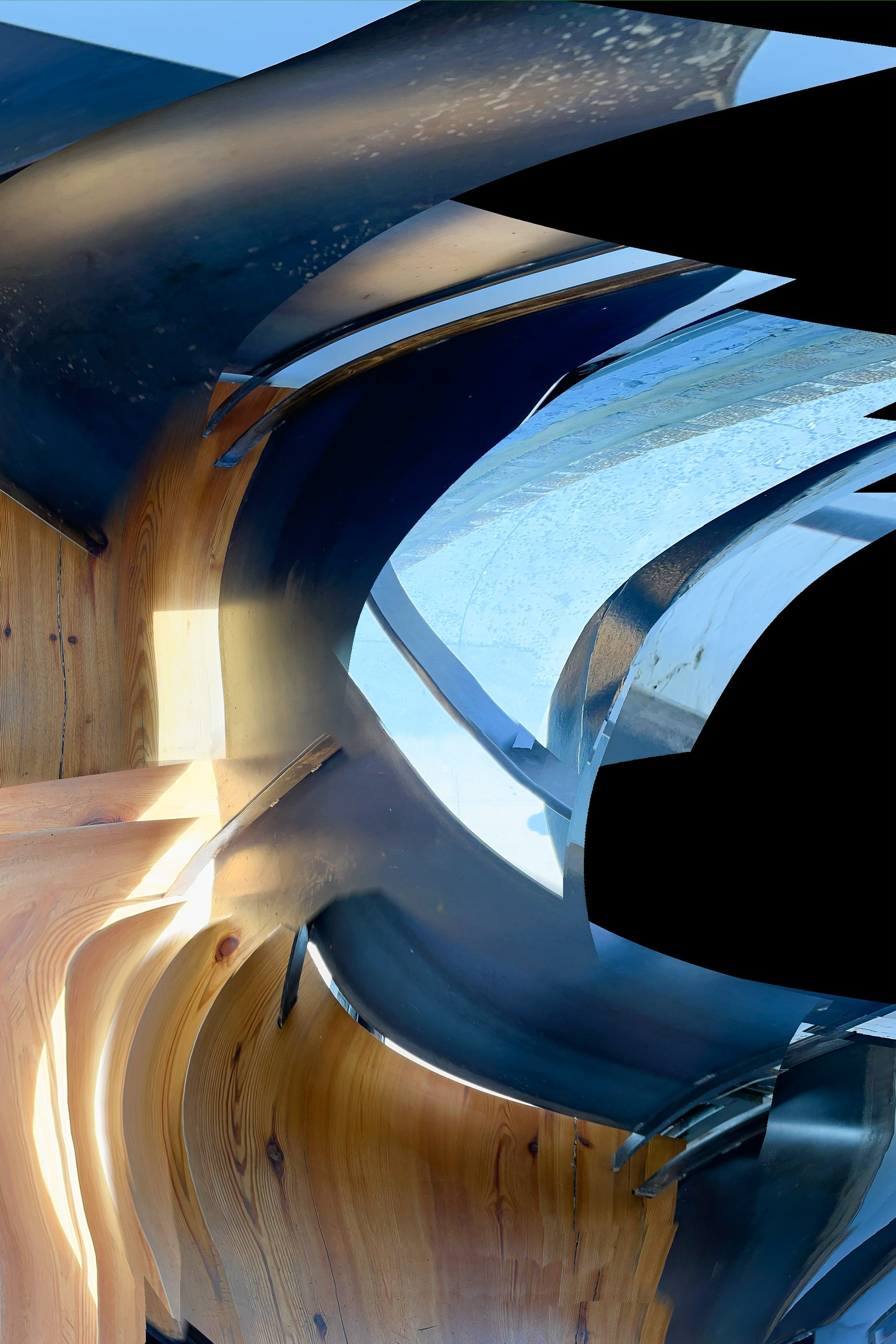
I always hand some portion of authorship to chance, though it is not pure randomness. I set up situations where contradiction is likely, yet I still cannot script the exact forms that appear. Situations can fall flat, or the camera can discard something I hoped to keep, or invent a form I never expected. Accepting that risk feels like a more honest way to reflect on how perception and technology shape our experience. It resists the fantasy that images are neutral records.
The image carries within it the moments when the system stumbled or insisted, when it decided to delete, compress, or invent. I allow chance and malfunction to coexist with intention. The photograph is no longer a demonstration of control. It becomes a field of negotiation, where my choices, the world’s resistance, and the camera’s automated editing all remain visible. That visibility is the ethical core of Prolongance.
Origins and Parallels: Collage, Constraint, Collaboration
Collage has long been a way of working with fragments, cutting and assembling pieces from photographs, printed matter, drawings, or invented forms into a new whole. Images are lifted out of their initial contexts and recombined on tables or screens, rearranged and refined at a distance from the conditions that produced them.
Prolongance relocates the logic of collage into the act of capture itself. The panorama engine slices the world into strips as the device moves and then stitches those strips together. The picture is assembled from fragments and accepts only what can be gathered in one durational pass. Here, collage unfolds as a three-way collaboration: bodily motion sets a trajectory, the environment responds with its own rhythms and interruptions, and the algorithm supplies an internal model of how strips ought to align and what counts as a plausible surface. The panorama engine decides in real-time which slices to retain, how to warp them into contact, and where to halt or interpolate when reconciliation fails. The refusal to reorganize, retouch, or manually collage the file afterwards preserves this negotiation among body, world, and algorithm, instead of replacing it with a more controlled second stage of composition.


In this sense, the seams, ghosted forms, kinks, and black fields in Prolongance mark the limits of what body, world, and algorithm could bring into agreement during that single attempt. These visible articulations link the work to a longer history of collage while insisting that fragmentation remains inside the same ethical space as capture rather than being resolved after the fact.
Next Week: Black Fields and Broken Continuities. I will look at other visual systems that fracture, limit, or omit, and set them alongside my own process and images.
In the meantime, I wish you a Happy Holiday Season!
Eric